Navigating the Will Contest Process in California
The loss of a loved one is invariably a difficult experience. Amidst the emotional turmoil, the administration of their estate can introduce further complexities, especially when questions arise about the validity of the deceased’s testament. In California, the legal process for challenging a will, known as a will contest, is intricate and demands careful navigation.
Understanding the grounds for a contest, the procedural steps involved, and the importance of seeking expert legal counsel, such as a dedicated contest will lawyer, is paramount for anyone considering or facing such a challenge. This article delves into the multifaceted world of will contests in California, providing a comprehensive guide to help interested parties understand their rights and the legal landscape.
Who Has the Legal Standing to Contest a Will?
Not everyone who disagrees with the terms of a will has the right to challenge it in court. California law stipulates that only “interested parties” possess the legal standing to initiate a will contest. This typically includes:
- Heirs: Individuals who would inherit from the deceased under California’s intestacy laws if there were no valid will. This generally includes spouses, children, parents, siblings, and other relatives.
- Beneficiaries: Individuals or entities named as beneficiaries in the current will or in a previous version of the will.
- Creditors: Individuals or entities with outstanding claims against the deceased’s estate.
Establishing legal standing is the first crucial step in the will contest process. If a party lacks the requisite standing, the court will likely dismiss their challenge.
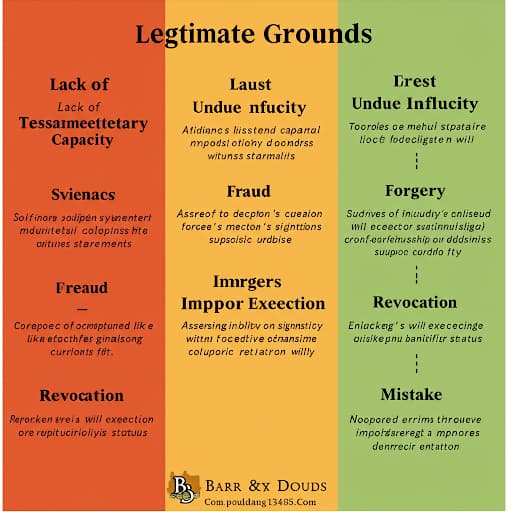
Legitimate Grounds for Contesting a Will in California
To successfully contest a will, the challenging party must assert valid legal grounds demonstrating why the will should be deemed invalid. California law recognizes several such grounds:
- Lack of Testamentary Capacity: This asserts that the testator (the person who made the will) did not have the mental capacity to understand the nature of the will, the extent of their assets, and who their natural beneficiaries were at the time they signed the document. Evidence for this claim may include medical records, witness testimony about the testator’s mental state, and expert opinions from medical professionals.
- Undue Influence: This ground alleges that someone exerted pressure or manipulation on the testator, overriding their free will and causing them to create a will that did not reflect their true intentions. Proving undue influence often requires demonstrating a confidential relationship between the testator and the influencer, suspicious circumstances surrounding the will’s creation, and a will that significantly benefits the influencer.
- Fraud: This involves allegations that the testator was intentionally deceived about the contents or the signing of the will. Examples include being told they were signing a different document or being misled about the terms of the will.
- Forgery: This claim asserts that the signature on the will is not the testator’s genuine signature. Forensic document analysis and expert testimony can be crucial in such cases.
- Improper Execution: California law has specific requirements for how a will must be signed and witnessed. If these legal formalities were not followed correctly (e.g., not signed in the presence of two witnesses, or if a witness was also a beneficiary), the will may be deemed invalid.
- Revocation: This ground argues that the will being presented to the court was revoked by the testator, either through the creation of a subsequent valid will or by physically destroying the original will with the intent to revoke it.
- Mistake: This applies in situations where the testator made a significant error in the terms of the will, and the document does not accurately reflect their true intentions.
It is important to note that simply being dissatisfied with the distribution of assets in a will is not a valid ground for a contest. The law presumes that a testator has the right to dispose of their property as they see fit, provided they do so legally and with the requisite mental capacity.
The Step-by-Step Process of a Will Contest
Navigating the will contest process involves several key stages:
- Consulting with a Contest Will Lawyer: The first and arguably most crucial step is to seek legal advice from an experienced California probate litigation attorney. An attorney can assess the merits of a potential contest, explain the relevant laws and procedures, and guide the interested party through the complex legal landscape. They can help determine if sufficient grounds and evidence exist to proceed.
- Gathering Evidence: Building a strong case requires gathering all relevant documentation and information to support the grounds for the contest. This may include obtaining copies of the will and any prior wills, medical records of the deceased, financial documents, witness statements, correspondence, and any other evidence that substantiates the claims of incapacity, undue influence, fraud, or other valid grounds.
- Filing a Petition with the Probate Court: To formally initiate a will contest, the interested party must file a petition with the probate court in the county where the deceased resided. This petition outlines the legal grounds for challenging the will and provides supporting documentation. There are strict deadlines for filing a will contest; typically, it must be filed within 120 days after the will has been admitted to probate. Missing this deadline can result in the dismissal of the case.
- Notifying Interested Parties: Once the petition is filed, all interested parties (as defined earlier) must be formally notified of the will contest. This ensures that everyone with a stake in the outcome has the opportunity to respond to the challenge.
- Discovery: This is a crucial phase where both sides gather further information and evidence. It can involve interrogatories (written questions), requests for documents, depositions (oral testimony under oath), and subpoenas. The discovery process helps to clarify the facts and strengthen each party’s legal position.
- Mediation or Settlement Negotiations: Many will contests are resolved through mediation, where a neutral third party facilitates discussions between the opposing sides to reach a settlement agreement. Settlement can save time, expense, and emotional distress compared to a full trial.
- Court Trial: If a settlement cannot be reached, the will contest will proceed to trial. In court, both sides will present their evidence, call witnesses, and argue their case before a judge (and sometimes a jury). The challenging party bears the burden of proving the will’s invalidity.
- Court Decision and Potential Appeals: After considering all the evidence and arguments, the court will issue a ruling either upholding the validity of the will or declaring it invalid. If the will is invalidated, the deceased’s assets will be distributed according to a prior valid will or, if no prior will exists, according to California’s intestacy laws. The losing party has the right to appeal the court’s decision to a higher court.
The Role of Attorneys in Danville
Engaging experienced legal counsel is indispensable when navigating the complexities of a will contest. Attorneys in Danville, specializing in probate litigation, possess the expertise and knowledge necessary to effectively represent clients in these challenging situations. They can:
- Evaluate the strength of a potential will contest.
- Gather and present compelling evidence.
- Navigate complex legal procedures and deadlines.
- Represent clients in court proceedings and negotiations.
- Protect their clients’ rights and interests throughout the process.
The guidance of skilled attorneys in Danville can significantly increase the chances of a favorable outcome in a will contest. Their familiarity with local courts and legal practices can also be advantageous.
Conclusion
The process of navigating a will contest in California is a legal minefield that requires a thorough understanding of probate law, meticulous evidence gathering, and strategic legal representation. Individuals contemplating a will contest must first establish their legal standing and have valid legal grounds for their challenge. The procedural steps involved, from filing a petition to potential trial and appeal, demand careful attention to detail and adherence to strict deadlines. Seeking the counsel of experienced contest will lawyers and attorneys in Danville is crucial for anyone wishing to contest a will or defend one against a challenge. Their expertise can provide invaluable assistance in navigating this intricate process and striving for a just resolution.