Protecting the Rights of the Conservatee: The Importance of Legal Counsel
When an adult loses the capacity to care for themselves or manage their financial affairs, a conservatorship may become a necessary legal mechanism to provide protection and support. However, this process, while intended to safeguard the individual, can also significantly impact their fundamental rights and autonomy. Ensuring that the rights of the conservatee are vigorously protected throughout the conservatorship proceedings and their duration is paramount, and this is where the expertise and advocacy of legal counsel become essential.
Understanding Conservatorship and Its Impact on Rights
A conservatorship is a court-ordered arrangement appointing a conservator to make decisions for an incapacitated adult (the conservatee), regarding personal care, finances, or both. While intended for protection, it inherently restricts the conservatee’s rights, potentially impacting their medical decisions, financial management, contractual abilities, living arrangements, and social interactions. Given these significant limitations, diligent defense of the conservatee’s rights is crucial throughout the legal process.
The Crucial Functions of Conservatorship Lawyers
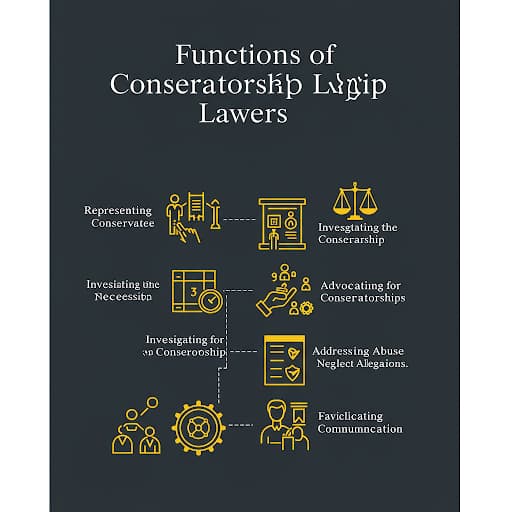
Conservatorship lawyers are vital in protecting the rights and well-being of proposed or current conservatees. Their responsibilities include representing the conservatee, ensuring due process, investigating the necessity of conservatorship, advocating for the conservatee’s preferences, challenging the scope of powers, monitoring the conservatorship, addressing abuse or neglect allegations, seeking modification or termination, explaining rights, and facilitating communication. Their primary duty is to advocate for the individual’s wishes and best interests, which may involve opposing the conservatorship or seeking less restrictive alternatives.
Ensuring Due Process and Advocating for the Conservatee’s Voice
The attorney ensures that all legal procedures are followed, including proper notification, the right to attend hearings, present evidence, cross-examine witnesses, and request a jury trial. They thoroughly investigate the need for conservatorship, evaluating medical assessments and other relevant information to determine if it’s truly necessary and the least restrictive option. Crucially, they communicate the conservatee’s wishes to the court, even if those wishes differ from others’ opinions, ensuring their voice is heard in the proceedings.
Challenging Scope, Monitoring Actions, and Seeking Adjustments
If conservatorship is deemed necessary, the attorney advocates for the narrowest possible scope of powers, preserving the conservatee’s autonomy where possible. They continue to monitor the conservator’s actions for the conservatee’s best interests and legal compliance. If abuse or neglect is suspected, they investigate and take legal action. Furthermore, if the conservatee’s condition improves or the conservatorship becomes unnecessary, their attorney can petition for modification or termination.
The Importance of Independent Counsel and Intersection with Trust Administration
Independent legal counsel, representing only the conservatee’s interests, is vital to ensure their voice is heard and rights are defended without conflicting loyalties. Conservatorships can also intersect with trust administration attorney matters, particularly if the conservatee is a trust beneficiary or trustee. In such cases, legal expertise in both areas is essential for proper management and administration.
When Legal Counsel Becomes Necessary for a Conservatee
Legal counsel should be sought immediately when a conservatorship petition is filed, if the conservatee objects, if concerns arise about the proposed conservator, if rights violations or abuse are suspected, if the conservatee’s condition improves, or whenever the conservatee has questions or concerns about the process or their rights. Early legal involvement is crucial to effectively protect the individual’s interests.
Conclusion
Protecting the rights and well-being of a conservatee is a fundamental legal and ethical imperative. Conservatorship lawyers are indispensable advocates for these vulnerable individuals, ensuring their voices are heard, their due process rights are upheld, and their autonomy is maximized. Their expertise in navigating the complexities of conservatorship law is crucial in safeguarding the conservatee’s rights and promoting their best interests throughout the legal process. Seeking experienced legal counsel promptly is essential to ensure that the rights of the conservatee are vigorously defended and their dignity is maintained.