Avoiding Common Pitfalls in Trust Administration with Legal Guidance
Serving as a trustee is a significant responsibility, demanding meticulous attention to detail and a thorough understanding of fiduciary duties. The process of trust administration, while often intended to be a smooth transfer of assets according to a grantor’s wishes, is fraught with potential pitfalls that can lead to legal challenges, financial liabilities, and strained relationships among beneficiaries. Seeking timely and comprehensive legal guidance from experienced professionals, such as trust administration attorneys, is paramount to navigate these complexities effectively and avoid common mistakes that can undermine the trust’s purpose.
Understanding the Trustee’s Core Fiduciary Duties
At the heart of trust administration lies the trustee’s fiduciary duty, a legal obligation to act in the best interests of the beneficiaries with utmost loyalty, good faith, and prudence. This encompasses key responsibilities such as acting solely in the beneficiaries’ interests (duty of loyalty), managing assets with reasonable care and skill (duty of prudence), treating all beneficiaries fairly (duty of impartiality), keeping beneficiaries informed and providing accurate accountings (duty to inform and account), and administering the trust according to its specific terms.
Common Pitfalls in Trust Administration and the Role of Legal Guidance
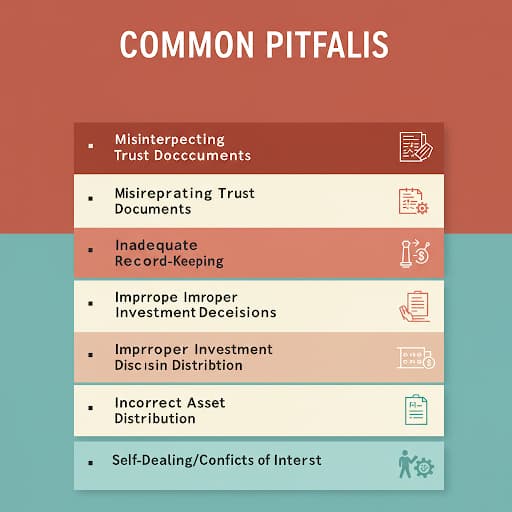
Numerous pitfalls can arise during trust administration, even with the best intentions. Legal counsel is crucial in identifying and mitigating these risks. The table below summarizes five common pitfalls and how legal guidance helps avoid them:
|
Common Pitfall |
Potential Consequences |
How Legal Guidance Helps Avoid It |
|
Misinterpreting Trust Documents |
Actions contrary to the grantor’s intent, disputes |
Expert interpretation of trust terms, clear understanding of obligations, and beneficiary rights. |
|
Inadequate Record-Keeping |
Allegations of mismanagement, legal challenges |
Advice on proper record-keeping practices, ensuring accounts meet legal standards. |
|
Improper Investment Decisions |
Financial losses for beneficiaries, liability |
Guidance on prudent investment strategies aligned with trust objectives and beneficiary needs. |
|
Incorrect Asset Distribution |
Violation of trust terms, harm to beneficiaries |
Ensuring distributions adhere strictly to the trust document’s timing and manner. |
|
Self-Dealing/Conflicts of Interest |
Breach of fiduciary duty, legal repercussions |
Advice on what constitutes self-dealing, guidance on navigating potential conflict situations. |
The Expertise of Trust Administration Attorneys
Engaging experienced trust administration attorneys provides trustees with invaluable support throughout the entire process. Their expertise ensures a clear understanding of trust documents and beneficiary rights. They offer proactive risk management to identify and avoid potential pitfalls beyond the five listed above, such as tax obligations, communication challenges, and personal liability concerns. They guarantee compliance with all legal and tax requirements, protecting trustees from liability. They facilitate smooth and efficient administration, minimizing delays. They also play a crucial role in mediating and resolving disputes among beneficiaries, helping maintain positive relationships. If the trust administration involves an incapacitated beneficiary, you might even need to connect with a “conservatorship attorney near me” for related guidance on protecting their interests during the trust process.
Conclusion
Serving as a trustee demands careful navigation of complex legal and fiduciary duties. Avoiding the common pitfalls inherent in trust administration necessitates a proactive approach, meticulous attention to detail, and, most importantly, the guidance of experienced legal counsel. By partnering with knowledgeable trust administration attorneys, trustees can confidently fulfill their obligations, ensure compliance with all legal requirements, protect themselves from liability, and ultimately honor the grantor’s intentions while fostering positive relationships with beneficiaries. The investment in expert legal advice is paramount to safeguarding the integrity of the trust and ensuring its successful administration for generations to come.